



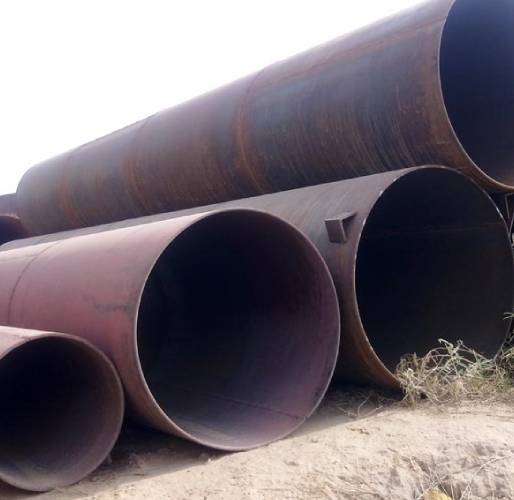
What is Mild Steel Pipe?
Mild steel pipe is a metal pipe made with very little carbon. The carbon level stays under 0.25%. This specific composition stops the steel from hardening during the heat treatment. It also increases the pipe’s ability to weld and bend. The pipe can be joined using standard welding processes without special pre-heating or post-weld treatments.
MS pipes serve construction, plumbing, water supply, gas transmission, and structural applications. The low carbon content makes the pipe malleable—it can be bent, cut, and shaped without cracking. These pipes come in ERW, seamless, black, and galvanized variants. Industry professionals also refer to them as Carbon Steel Pipe, CS Pipe, or Low Carbon Steel Pipe.
Types of Mild Steel Pipes
Types of MS Pipes differ by their manufacturing method and surface treatment. The manufacturing process decides how much pressure they can take. ERW mild steel pipes handle normal pressure and stay affordable. Mild steel seamless pipe is for heavy-duty applications. Surface finishes matter for rust. Black pipes need paint to prevent rust from the outside. Galvanised ones have a zinc layer for protection.
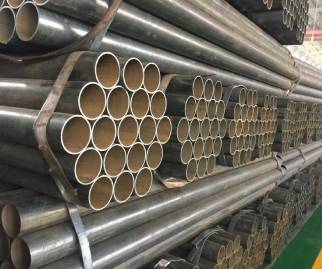
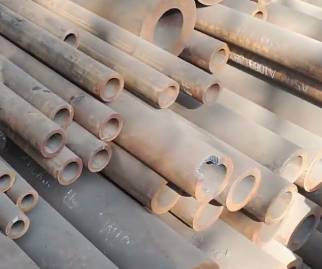
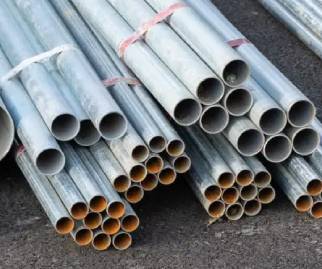
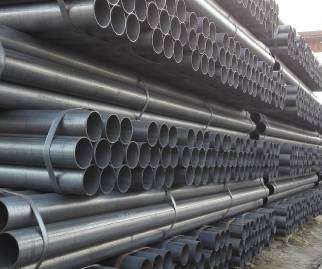
Mild Steel Pipe Specifications
The mild steel pipe specification covers standards, grades, sizes, and delivery conditions. All specifications below conform to Indian and international standards.
| Standards | IS 1239 (Part 1 & 2), IS 3589, IS 1161, ASTM A53, BS 1387, EN 10255 |
|---|---|
| Grades | YST 210, YST 240, YST 310, YST 355, Fe 330, Fe 410 |
| Classes | Light (A), Medium (B), Heavy (C) |
| Size Range | 15 NB to 600 NB (1/2" to 24") |
| Wall Thickness | 1.8 mm to 12.7 mm (varies by class and size) |
| Finish | Black, Galvanized, Anti-corrosive coated, Painted |
| Length | 6m standard (4m to 7m available), Custom cut lengths |
| End Types | Plain End (PE), Threaded (BSP/NPT), Beveled End (BE) |
| Surface Condition | Mill finish, Black, Galvanized, Oiled |
Mild Steel Pipe Classes (Light, Medium, Heavy)
IS 1239 classifies MS pipes into three classes based on wall thickness. Each class can be identified by a colour. Yellow is for Light, Blue is for Medium, and Red is for Heavy.
Class A (Light)
It has the thinnest wall and suits low-pressure water and gas supply. Because of its thin walls, threading is a limited option.
Class B (Medium)
This is the most commonly used class for general plumbing and water supply applications. It offers a balance between cost and pressure capability.
Class C (Heavy)
It has the thickest wall and is mandatory for steam lines, high-pressure applications, and fire protection systems. Weight tolerance: Light class -8%, Medium and Heavy class ±10%.
Difference Between ERW and Seamless MS Pipes
The main difference between ERW and seamless MS pipes lies in the manufacturing process. ERW pipes are rolled and welded longitudinally, while seamless pipes are extruded from solid billet.
| Aspect | ERW Pipe | Seamless Pipe |
|---|---|---|
| Manufacturing | Rolled strip welded longitudinally | Extruded from solid billet |
| Weld Seam | Longitudinal weld seam present | No weld seam |
| Strength | Lower (approx. 80% of seamless) | Higher, uniform in all directions |
| Pressure Rating | Low to medium pressure | High pressure applications |
| Wall Uniformity | Consistent | Slight variation possible |
| Size Range | Wide range available | Limited for larger sizes |
| Cost | Lower | Higher (20–30% more) |
| Applications | Water supply, gas lines, structural uses | High-pressure and critical applications |
ERW pipes are more preferred for cost-sensitive applications, like structural uses, water and gas supply. Seamless pipes are found in high-pressure systems, boiler applications, and critical piping.
Difference Between MS Pipe and GI Pipe
Surface treatment is the main difference between MS (Black) and GI pipes. MS pipe is an uncoated bare steel. GI pipe uses a hot-dip galvanised zinc coating.
| Aspect | MS (Black) Pipe | GI Pipe |
|---|---|---|
| Coating | None (bare steel) | Zinc coating (hot-dip galvanized) |
| Corrosion Resistance | Low (requires painting or protective coating) | High (zinc layer protects from rust) |
| Cost | Lower | Higher (20–30% more than black pipe) |
| Appearance | Dark grey or black surface | Bright silver metallic finish |
| Service Life | 5–10 years (without coating) | 20–30 years |
| Weldability | Excellent | Requires zinc removal before welding |
| Applications | Gas lines, indoor piping, structural use | Water supply, outdoor installations, corrosive environments |
Use MS (Black) pipes for gas lines, indoor applications, and where painting is acceptable. Use GI pipes for water supply, outdoor installations, and corrosive environments.
Difference Between IS 1239 and IS 3589
IS 1239 and IS 3589 are the two primary Indian standards for mild steel pipes. They differ in size range and application scope.
| Aspect | IS 1239 | IS 3589 |
|---|---|---|
| Application | Water, gas, steam, air | Water, gas, sewage transmission |
| Size Range | 15 NB to 150 NB (Part 1) | 200 NB and above |
| Manufacturing | Seamless and ERW | Primarily ERW |
| Classes | Light (A), Medium (B), Heavy (C) | Based on pressure rating |
| Grades | YST 210, 240, 310, 355 | Fe 330, Fe 410 |
| Threading | BSP threading possible | Plain end typical |
| Coating | Black and Galvanized | Black, coated as required |
| Typical Use | Plumbing, water/gas supply | Large diameter infrastructure |
IS 1239 covers smaller sizes for plumbing, water, gas supply, and structural work. IS 3589 covers large-diameter pipes for water transmission, sewage, and infrastructure projects.
Mild Steel Pipe Applications
Mild steel pipes find applications in 10 major industries, including construction, infrastructure, and industrial sectors.
Quality Testing & Certification
All MS pipes undergo the following mandatory testing as per IS 1239 and IS 3589 requirements:
- Hydrostatic Test: Each pipe is tested at the specified pressure (70 bar for Class C) to verify pressure integrity and leak-proof joints.
- Flattening Test: Pipe section is flattened between parallel plates to verify ductility and weld quality for ERW pipes.
- Bend Test: Pipe is bent to a specified radius to check for cracks, splits, or laminations in the material.
- Drift/Mandrel Test: Mandrel is passed through pipe to verify internal dimensions and absence of internal projections.
- Tensile Test: Strip specimen is tested for ultimate tensile strength, yield strength, and elongation as per grade requirements.
- Weld Seam Test: For ERW pipes, weld seam is tested for fusion quality and absence of defects.
- Zinc Coating Test: For GI pipes, zinc coating weight and uniformity is tested as per IS 4736.
- Chemical Analysis: Spectrometer analysis for carbon, manganese, phosphorus, and sulfur content is done.
Available certifications:
- BIS (Bureau of Indian Standards) Certification - ISI Mark
- EN 10204/3.1B Material Test Certificate (MTC)
- Manufacturer's Test Certificate
- Third Party Inspection Report (TPI)
Frequently Asked Questions
-
What is the difference between MS pipe and GI pipe?
MS is bare steel and GI has a zinc coating. The zinc stops the pipe from rusting for a long time. GI lasts 20 years or more. Black ms pipe might only last 10 years. You will pay 20% more for the zinc. GI is for outdoor water. Black pipe works for indoor gas lines. -
What are the classes of MS pipe as per IS 1239?
IS 1239 classifies MS pipes into three classes based on wall thickness: Class A (Light) with thinnest wall, Class B (Medium) with moderate wall, and Class C (Heavy) with thickest wall. Class A suits low-pressure applications, Class B is the most commonly used for general plumbing, and Class C is mandatory for high-pressure and fire protection systems. Color codes: Yellow for Light, Blue for Medium, Red for Heavy. -
What is the standard length of MS pipe?
The standard length of MS pipe is 6 metres. Some orders come in 4m or 7m. We offer a custom cut-to-length service. We are a leading MS pipe supplier in Ahmedabad for these custom sizes. -
Can MS pipe be used for drinking water supply?
Yes, MS pipes can be used for drinking water supply, but we recommend galvanized (GI) pipes over black pipes. The zinc coating in GI pipes prevents rust and contamination. For potable water, IS 1239 GI pipes with ISI (BIS) certification should be used. -
What is the pressure rating of IS 1239 MS pipe?
The pressure rating of IS 1239 MS pipes depends on the class and size. For Class C (Heavy) pipes, typical working pressure is around 10-21 kg/cm² (150-300 psi) for smaller sizes (15-50 NB). Class B (Medium) has lower ratings, and Class A (Light) suits only low-pressure applications. Test pressure is typically 50-70 bar for Class C pipes.