



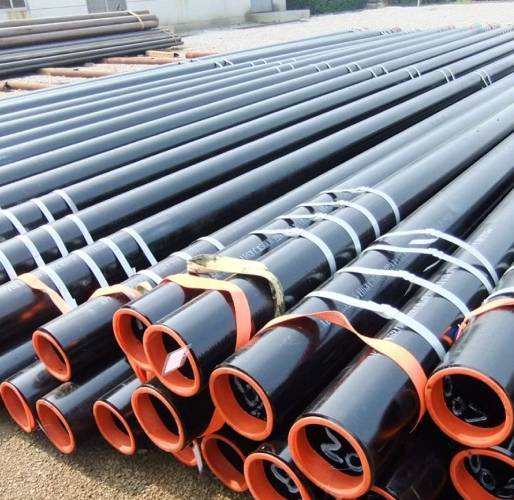
What is ERW Pipe?
ERW pipe stands for Electric Resistance Welded pipe. We make this pipe from steel coil or strip by roll forming into a tubular shape. High-frequency electric current heats the edges to welding temperature. Pressure is then applied to forge the heated edges together. No filler metal is added during this process. The result is a strong pressure weld with a nearly invisible seam after forging. This type is also called HFW (High Frequency Welded) pipe. ERW pipes are the most economical welded pipe type for general industrial use.
Types of Carbon Steel ERW Pipe
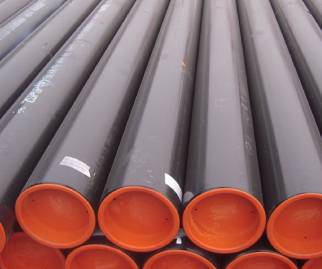
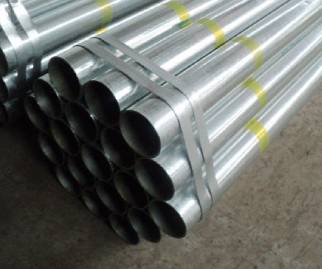
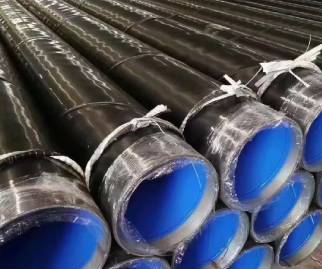
ERW Pipe Manufacturing Process
The manufacturing of ERW pipe follows a systematic process to produce quality pipes:
- Steel coil uncoiling and leveling to prepare the raw material
- Edge trimming and preparation for uniform strip width
- Roll forming the flat strip into a tubular shape
- High-frequency induction heating of the edges to welding temperature
- Pressure forging of heated edges to create the weld bond
- Weld seam scarfing to remove excess material from inside and outside
- Sizing and straightening to achieve final dimensions
- NDT inspection of the weld seam for defect detection
- Cutting to specified lengths
- Hydrostatic testing to verify pressure integrity
- End finishing as per customer requirements
ERW vs Seamless Pipe - Comparison
The following comparison helps you decide between ERW and seamless pipes based on your application requirements:
| Feature | ERW Pipe | Seamless Pipe |
|---|---|---|
| Manufacturing | Welded from coil | Pierced from solid billet |
| Cost | Lower | Higher |
| Size Range | Up to 24” | Up to 24”+ |
| Pressure Rating | Moderate | Higher |
| Wall Uniformity | Good | Excellent |
| Weld Seam | Yes (longitudinal) | No |
| Applications | Structural, water, gas | High-pressure, critical service |
Carbon Steel ERW Pipe Specifications
The following carbon steel ERW pipe specifications, including grades, standards, and dimensions, outline our product range.
| Specification | Details |
|---|---|
| Standards | ASTM A53 Type E, ASTM A135, API 5L, IS 1239, IS 3589 |
| Grades | Grade A, Grade B, API 5L B to X70 |
| OD Range | 21.3mm - 610mm (1/2" - 24") |
| Wall Thickness | SCH 10, 20, 30, STD, 40, 60, 80 |
| Length | 6m, 12m, SRL, DRL |
| Surface Finish | Black, Galvanized, Coated (3LPE, FBE, Epoxy) |
| End Options | Plain, Beveled, Threaded, Grooved |
Chemical Composition of Carbon Steel ERW Pipes
The chemical composition of carbon steel ERW pipe varies depending on the grade. Grade B has more carbon and manganese. This provides the ERW pipe strength. Refer to our product catalog for more information on the chemical composition.
| Specification | Grade | Chemical Composition [%] | ||||||||||||||
|---|---|---|---|---|---|---|---|---|---|---|---|---|---|---|---|---|
| C | Mn | P | S | Si | Cr | Mo | Cu | Ni | V | |||||||
| Min | Max. | Min | Max. | Max. | Max. | Min. | Max | Min. | Max | Min. | Max | Max | Max | Max | ||
| ASTM A-53 | A B |
- | 0.25 0.30 | - - | 0.95 1.20 | 0.050 0.050 | 0.045 0.045 | - - | - - | - - | 0.40 0.40 | - - | 0.15 0.15 | 0.40 for S 0.40 for S | 0.40 0.40 | 0.08 0.08 |
Mechanical Properties of Carbon Steel ERW Pipes
The pressure rating and use of ERW pipes depend on their mechanical properties. Visit our product catalog for complete tables of mechanical properties.
Properties & Features
The Carbon steel ERW pipe has 4 main properties that make it stand out:

Cost Effective:
ERW pipe is the most affordable type of pipe because it is made efficiently from steel coil. The continuous production process keeps costs lower than other options that aren't seamless.

Consistent Dimensions:
Roll forming provides tight tolerances on wall thickness and OD. This consistency makes installation easier and makes sure that the product works as expected.

Good Weldability:
The carbon steel base material accepts field welding and fabrication readily. Standard welding procedures work well for joining and modifications.

Smooth Surface:
The surface of ERW pipe is smooth enough for coating and galvanizing. The quality of the surface helps the coating stick and improves appearance.
Applications
This ERW carbon steel pipe is mainly found in 5 major industrial applications:
Testing & Certification
All our carbon steel ERW pipes undergo comprehensive testing and come with proper certification:
- Eddy Current Testing (ECT) for weld seam inspection
- Ultrasonic Testing of the weld area for defect detection
- Hydrostatic Testing to verify pressure integrity at specified test pressure
- EN 10204/3.1B MTC documenting chemical and mechanical properties
Frequently Asked Questions
-
What does ERW stand for?
ERW stands for Electric Resistance Welded. It refers to the welding process that uses electrical resistance heating to fuse the edges of the steel strip without adding filler metal. The high-frequency current generates heat precisely at the joint area. -
Is the ERW pipe as strong as seamless?
ERW pipe is suitable for most industrial and structural applications. The weld seam in quality ERW pipe achieves strength equal to the parent material. For very high pressure or critical service where weld seam concerns exist, seamless pipe may be preferred. -
Can ERW pipe be used for gas?
Yes, ERW pipe that meets the ASTM A53 or API 5L standards is approved for use for gas service at specified pressures. The condition is that the pipe must have the proper markings and certifications to be used for a gas line.