



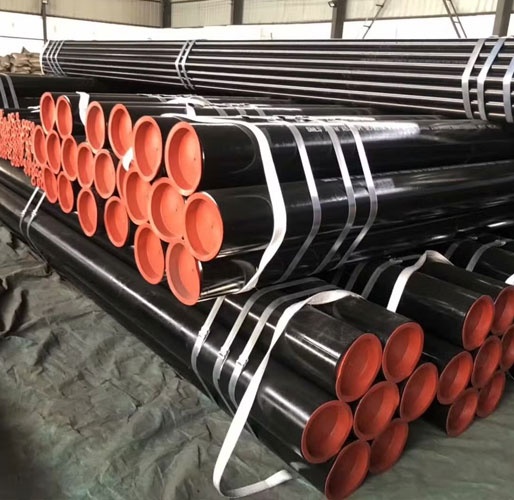
What is API 5L Pipe?
API 5L is a specification developed by the American Petroleum Institute for seamless and welded steel pipes that are used in pipeline transportation systems. This is the standard for line pipes in the petroleum and natural gas industries worldwide. Every major pipeline project specifies API 5L pipes.
The specification covers two product specification levels: PSL1 (standard quality) and PSL2 (stricter requirements for critical applications). PSL2 adds mandatory impact testing, NDT inspection and full heat traceability.
Grade naming follows a logical system. Grade B is the basic grade. Grades starting with X indicate minimum yield strength in ksi. So X52 means 52,000 psi (360 MPa) minimum yield strength. Higher numbers mean stronger pipes for higher-pressure service. These pipes are mainly used in applications like oil transmission, natural gas pipelines, water pipelines and mineral slurry transport.
Difference Between API 5L PSL1 and PSL2
The main difference between PSL1 and PSL2 is in testing requirements and quality control. PSL2 needs stricter limits and additional testing:
| Requirement | PSL1 | PSL2 |
|---|---|---|
| Chemical Composition | Basic limits | Stricter limits, CEQ required |
| Mechanical Properties | Yield & Tensile only | + Impact test (CVN), max yield |
| NDT Testing | Not mandatory | Mandatory |
| Traceability | Basic | Full heat traceability |
| Sour Service | Not applicable | Available (NS, QS, MS) |
| Carbon Equivalent | Not specified | Specified |
PSL2 is required for offshore applications, sour service environments and critical pipeline installations. PSL2 delivery conditions include R (As Rolled), N (Normalised), Q (Quenched & Tempered) and M (Thermomechanical).
API 5L Pipe Grades
API 5L pipe grades are classified by yield strength. The X grades use yield strength in ksi. The L grades use yield strength in MPa. Both naming systems are equivalent - X52 equals L360, X65 equals L450.
1. API 5L Grade B Pipe
Grade B is the most commonly used basic grade. Minimum yield strength is 241 MPa (35,000 psi) with tensile strength of 414 MPa (60,000 psi) minimum. This grade is equivalent to ASTM A53 Gr.B and ASTM A106 Gr.B. Use this grade for general oil and gas transmission and water pipelines where high strength is not required.
2. API 5L X42 Pipe
X42 (also called L290) has a yield strength of 290 MPa (42,100 psi) minimum and tensile strength of 414 MPa (60,000 psi) minimum. Higher strength than Grade B makes it suitable for medium-pressure pipeline applications.
3. API 5L X52 Pipe
X52 (L360) is the most widely used grade in the pipeline industry. Yield strength is 360 MPa (52,000 psi) minimum with tensile strength of 460 MPa (66,700 psi) minimum. This grade handles high-pressure oil and gas transmission and is available in sour service versions for H2S environments.
4. API 5L X60 Pipe
X60 (L415) is a high-strength grade for demanding applications. Yield strength is 415 MPa (60,200 psi) minimum with tensile strength of 520 MPa (75,400 psi) minimum. It is specified for high-pressure trunk pipelines.
5. API 5L X65 and X70 Pipe
X65 (L450) has a yield strength of 450 MPa and a tensile strength of 535 MPa. X70 (L485) has a yield strength of 485 MPa and a tensile strength of 570 MPa. These high-strength grades serve large diameter, high-pressure trunk pipelines. They are typically manufactured by the LSAW or DSAW process.
API 5L Pipe Specifications
The table below outlines the specifications that must be met when making API 5L line pipe for transporting oil and natural gas:
| Grades | API 5L Grade B, X42, X52, X56, X60, X65, X70, X80 |
|---|---|
| Thickness Schedule | SCH 10, SCH 20, SCH 40, SCH STD, SCH 80, SCH XS, up to SCH 160 |
| Ends Type | Beveled Ends, Plain Ends |
| Length Range | SRL (Single Random Length), DRL (Double Random Length), 20 FT (6 meters), 40 FT (12 meters), or Customized |
| Protection | Plastic Caps or Iron Caps |
| Surface Treatment | Natural, Varnished, Black Painted, FBE, 3PE (3LPE), 3PP, CWC (Concrete Weight Coated), CRA Clad or Lined |
API 5L Pipe Chemical Composition
The following table outlines the chemical composition limits for API 5L line pipe grades under PSL1 requirements:
| PSL1 API 5L Grade B Pipe Chemical Composition | PSL2 | |||||||
|---|---|---|---|---|---|---|---|---|
| Grade | C (Max.) | Mn (Max.) | P (Max.) | S (Max.) | C (Max.) | Mn (Max.) | P (Max.) | S (Max.) |
| A | 0.22 | 0.90 | 0.03 | 0.03 | 0.22 | 1.20 | 0.025 | 0.015 |
| B | 0.26 | 1.20 | 0.03 | 0.03 | 0.22 | 1.30 | 0.025 | 0.015 |
| X42 | 0.26 | 1.30 | 0.03 | 0.03 | 0.22 | 1.40 | 0.025 | 0.015 |
| X46 | 0.26 | 1.40 | 0.03 | 0.03 | 0.22 | 1.40 | 0.025 | 0.015 |
| X52 | 0.26 | 1.40 | 0.03 | 0.03 | 0.22 | 1.40 | 0.025 | 0.015 |
| X56 | 0.26 | 1.40 | 0.03 | 0.03 | 0.22 | 1.40 | 0.025 | 0.015 |
| X60 | 0.26 | 1.40 | 0.03 | 0.03 | 0.22 | 1.45 | 0.025 | 0.015 |
| X65 | 0.26 | 1.45 | 0.03 | 0.03 | 0.22 | 1.65 | 0.025 | 0.015 |
| X70 | 0.26 | 1.65 | 0.03 | 0.03 | 0.22 | 1.85 | 0.025 | 0.015 |
API 5L Pipe Mechanical Properties
API 5L line pipe grades must meet specific mechanical performance criteria for safe petroleum and gas transmission, with minimum requirements outlined in the table below:
| Mechanical Properties PSL 1 | |||||
|---|---|---|---|---|---|
| Grade | Yield Strength(Min.) | Tensile Strength(Min.) | Elongation | ||
| Ksi | MPa | Ksi | MPa | E=1944 A 0.2 /U 0.9 | |
| B | 35 | 241 | 60 | 414 | |
| X42 | 42 | 290 | 60 | 414 | |
| X46 | 46 | 317 | 63 | 434 | |
| X52 | 52 | 359 | 66 | 455 | |
| X56 | 56 | 386 | 60 | 414 | |
| X60 | 60 | 414 | 63 | 434 | |
| X65 | 65 | 448 | 66 | 455 | |
API 5L Pipe Manufacturing Types
API 5L line pipes are manufactured through different processes based on size and application:
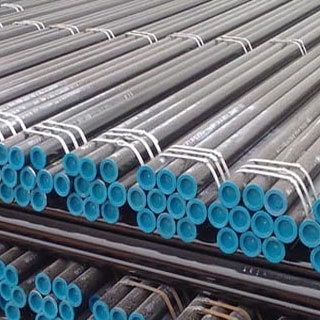
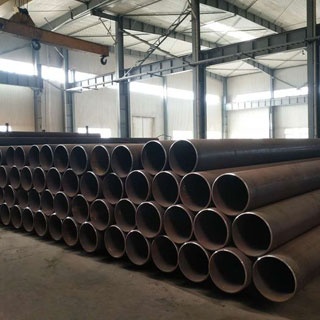
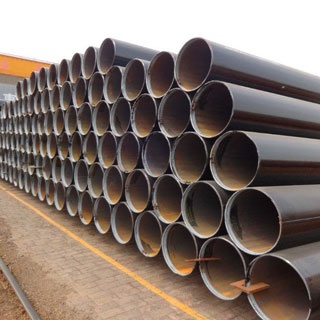
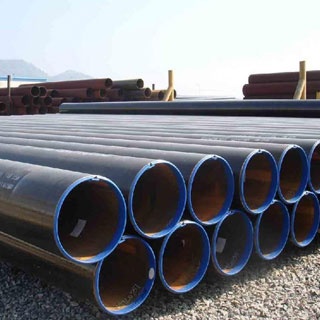
API 5L Line Pipe Applications
API 5L line pipes are used extensively in energy infrastructure. These pipes serve the following 6 industries:
Quality Testing & Certification
- Hydrostatic Test: Each pipe is tested without leakage through the weld or pipe body.
- Tensile Test: Verification of yield strength, tensile strength, and elongation.
- CVN Impact Test (PSL2): Charpy V-notch testing at specified temperatures for pipe body, weld, and HAZ.
- Flattening Test: Performed on welded pipes to verify weld quality.
- Bend Test: Conducted on both seamless and welded pipes to confirm ductility.
- NDT Testing (PSL2): Ultrasonic, radiographic, or electromagnetic inspection as required.
Available certifications:
- EN 10204/3.1B Material Test Certificate (MTC)
- Third Party Inspection Report (TPI)
- Mill Test Certificate
- Coating Inspection Report
Difference Between API 5L and ASTM A106/A53
The main difference between API 5L and ASTM specifications lies in their intended use:
| Aspect | API 5L | ASTM A106/A53 |
|---|---|---|
| Primary Use | Pipeline transmission | Plant piping, structural |
| Grades | B, X42–X80 | A, B, C |
| Testing | Hydrostatic mandatory | Per specification |
| Sour Service | Available (PSL2) | Not specified |
| Coating Options | Extensive (3PE, FBE) | Limited |
Frequently Asked Questions
-
What is API 5L pipe used for?
API 5L pipes are used for pipeline transportation of petroleum, natural gas and water. They are the standard specification for line pipes in oil and gas transmission systems. Applications include onshore trunk pipelines, offshore subsea lines, city gas distribution and water transmission. -
What is the difference between API 5L Grade B and X52?
The minimum yield strength of API 5L Grade B is 241 MPa (35 ksi). The minimum yield strength of X52 is 360 MPa (52 ksi). As X52 is 50% stronger, it is used for pipelines that carry higher pressure. X52 also comes in sour service grades for environments with H2S. -
What are PSL1 and PSL2 in API 5L?
PSL1 is the standard product specification, which has basic quality standards. PSL2 has stricter chemical limits, requires impact testing, NDT inspection, and full heat traceability. PSL2 is needed for offshore work, sour service, and important pipelines. -
Is API 5L Grade B equivalent to ASTM A106 Grade B?
The chemical composition and mechanical properties of API 5L Grade B and ASTM A106 Grade B are very similar. But API 5L is made specifically for pipeline transmission. It has additional requirements for the quality of the weld, hydrostatic testing and coating. ASTM A106 is intended for plant piping service. -
What coating is best for an API 5L buried pipeline?
3PE (3-Layer Polyethylene) and FBE (Fusion Bonded Epoxy) are the most common coatings for buried API 5L pipelines. 3PE provides excellent mechanical protection against soil stress and third-party damage. FBE offers superior adhesion to the steel surface. Selection depends on soil conditions, operating temperature and installation method.