



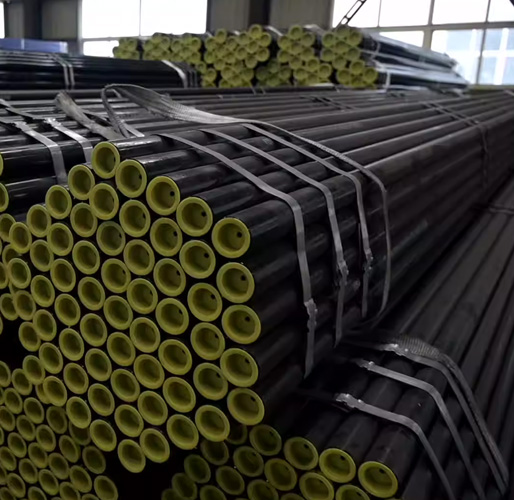
What is Grade 1010/1018 Tube?
Grades 1010 and 1018 are low carbon steels. They weld well. The 1010 1018 tube grades differ mostly in how much carbon they have. 1010 has 0.08-0.13% carbon, which is very low. 1018 has 0.15-0.20% carbon. We call this low-medium. Both are general purpose grades. Use them for mechanical applications that are not critical. ASTM A513 is the welded specification. ASTM A519 covers seamless tubes. These AISI 1010 tube and AISI 1018 steel tube products offer great machinability for your secondary operations. Next to this, they stay reliable during heavy use.
ASTM A519/A513 Grade 1010, 1018 Tube Specifications
Technical specifications for 1010/1018 mechanical tubing include standards, grades, dimensions, and other information:
| Feature | Detail |
|---|---|
| Specification | ASTM A519 / ASME SA519 |
| Product Name | A519 Mechanical Tubing, A519 Steel Tube |
| Size Range | 1/4" OD to 24" OD |
| Wall Thickness | Schedule 10 through XXS |
| Manufacturing | ASTM A519 Seamless Tube, Drawn-Over-Mandrel (DOM) |
| Finish | Hot-Finished (HF), Cold-Drawn (CD), Annealed, Normalized |
| Grades | Carbon Steel (1010, 1026) & Alloy Steel (4130, 4140, 8620) |
ASTM A519/A513 Grade 1010, 1018 Tube Chemical Composition
The 1010 vs 1018 composition shows the difference in carbon content that affects mechanical properties:
| Grade | Carbon (C) % | Manganese (Mn) % | Phosphorus (P) Max | Sulfur (S) Max | Silicon (Si) | Chromium (Cr) | Others |
|---|---|---|---|---|---|---|---|
| 1010 | 0.08-0.13 | 0.30-0.60 | 0.040 | 0.050 | - | - | - |
| 1018 | 0.15-0.20 | 0.60-0.90 | 0.040 | 0.050 | - | - | - |
1018 has higher manganese content which provides improved strength while maintaining good weldability
ASTM A519/A513 Grade 1010, 1018 Tube Mechanical Properties
Properties for cold drawn 1018 steel tube and 1010 steel tube show their high strength and hardness:
| Property | Value |
|---|---|
| Tensile Strength | 440 MPa (min) |
| Yield Strength | 370 MPa (min) |
| Elongation | 15% – 25% |
| Hardness | 126 – 180 HB |
| Modulus of Elasticity | 205 GPa |
A519 vs A513
It is important to understand the difference between these two standards:
- ASTM A519: Seamless Mechanical Tubing There is no weld seam. Integrity is higher. It is best for critical applications. We supply these as hot finished or cold drawn.
- ASTM A513: Welded Mechanical Tubing (DOM, ERW) This includes ASTM A513 1010 tubes. Machines weld these from a coil using electric resistance. DOM stands for Drawn Over Mandrel. This process improves the properties. It is an affordable choice for many jobs.
1010 vs 1018: When to Choose?
Choose 1010 when:
- You need the best weldability.
- Bending and forming are the most important things.
- Low strength is fine for your project.
- The job is very simple.
Choose 1018 when:
- You need a bit more strength.
- Light case hardening is required.
- Machining needs to be easier.
- The part will face more stress.
Applications
Low carbon mechanical tubing serves 3 major industrial applications:
Frequently Asked Questions
-
Can 1010/1018 be heat treated?
Limited heat treatment response due to low carbon content. The 1018 seamless tube can be lightly case hardened (carburised) for surface hardness. Neither grade is suitable for through hardening due to insufficient carbon content. For applications requiring hardening, consider 1045 or higher carbon grades.