



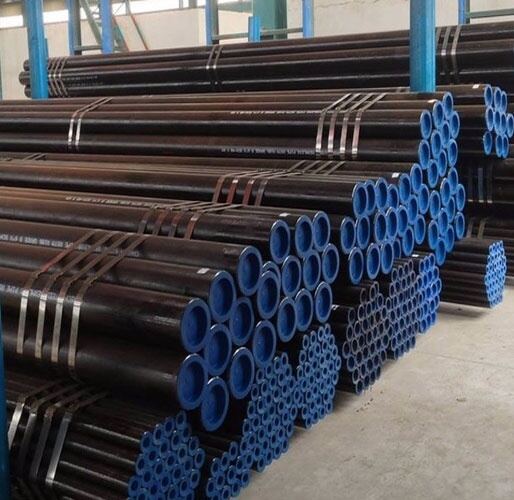
What is ASTM A53 Pipe?
ASTM A53 is the standard for steel, black and hot-dipped zinc-coated, welded and seamless pipe. This A53 carbon steel pipe specification is used in industrial, commercial and construction sites. The standard defines three types: Type S (Seamless), Type E (Electric Resistance Welded), and Type F (Furnace Butt Welded). This pipe is available in 2 grades: Grade A has lower strength, while Grade B has higher strength. Grade B is the standard choice because it has better mechanical properties. ASTM A53 carbon steel pipe performs well in pressure applications, structural builds, and transferring steam, water, or air. We supply ASTM A53 B carbon steel pipes when the application needs high-pressure capability.
ASTM A53 Pipe Types
ASTM A53 has three manufacturing types for different pressures.
- ASTM A53 Type S - Seamless: We make Type S pipe from a solid steel billet without a weld seam. Piercing and hot rolling are the main processes used to make them. Type S seamless pipe handles the most pressure. We specialise in providing this seamless pipe, which is ideal for high-pressure applications where weld integrity concerns are eliminated.
- ASTM A53 Type E - ERW: This is made from a steel coil that has a longitudinal seam. Electric resistance welding joins the edges. Type E is popular because it costs less. It is suitable for moderate pressure.
- ASTM A53 Type F - Furnace Welded: This is a continuous furnace butt-welded pipe that comes in smaller sizes like NPS 4 and below. Type F is for low-pressure water or gas in HVAC.
ASTM A53 Seamless Grades: A vs B
This table compares the ASTM A53 grades. Grade B is the most common.
| Property | Grade A | Grade B |
|---|---|---|
| Tensile Strength (min) | 330 MPa | 415 MPa |
| Yield Strength (min) | 205 MPa | 240 MPa |
| Carbon Content (max) | 0.25% | 0.30% |
| Applications | Low pressure | High pressure |
ASTM A53 Pipe Specifications
To ensure proper material selection for general-purpose applications, refer to the ASTM A53 carbon steel pipe specifications detailed below:
| Standard | ASTM A53 / ASME SA53 |
|---|---|
| Types | S, E, F |
| Grades | A, B |
| Pipes Size | NPS 1/8" to NPS 26" |
| Thickness | SCH 10, 40, 80, 160, STD, XS, XXS |
| Surface | Black or Hot-Dip Galvanised |
Chemical Composition of ASTM A53 Carbon Steel Seamless Pipes
The following table outlines the chemical composition requirements for ASTM A53 A53 Grade A and Grade B:
| Element | Grade A | Grade B |
|---|---|---|
| Carbon (C) | 0.25% max | 0.30% max |
| Manganese (Mn) | 0.95% max | 1.20% max |
| Phosphorus (P) | 0.05% max | 0.05% max |
| Sulphur (S) | 0.045% max | 0.045% max |
Mechanical Properties of Carbon Steel Pipe ASTM A53
The following table presents the minimum mechanical property requirements for ASTM A53 carbon steel pipe
| Property | Grade A | Grade B |
|---|---|---|
| Tensile Strength | 330 MPa min | 415 MPa min |
| Yield Strength | 205 MPa min | 240 MPa min |
| Elongation (min) | Varies by wall | Varies by wall |
Industries Using ASTM A53 Carbon Steel Seamless Pipe
ASTM A53 carbon steel pipe is used in the following 8 industries.
Testing & Certification
- Hydrostatic Test – Verifies pressure integrity at specified test pressure.
- Tensile Test – Confirms minimum tensile and yield strength requirements.
- Bend Test – Verifies ductility for bending operations.
- Flattening Test – Confirms pipe formability and weld soundness.
- EN 10204 / 3.1B MTC – Material Test Certificate documenting chemical and mechanical properties.
Frequently Asked Questions
-
What is the difference between A53 and A106?
A53 is for general use and can be seamless or welded. A106 is only seamless and is for high temperatures. A106 has stricter testing requirements. If the heat goes above 200°C, A106 is recommended. -
Can A53 seamless pipe be used for gas?
Yes. ASTM A53 Grade B is used for natural gas. It must be threaded or welded correctly. Black steel is common for gas distribution in residential and commercial applications. -
What are the different manufacturing methods for producing ASTM A53 standard pipe?
There are three ways of manufacturing ASTM A53 standard pipe. Type S is seamless and ir produced from a solid billet through piercing and rolling. Type E is made by welding a steel coil and electric resistance welding the seam. Type F uses continuous furnace welding for small sizes. -
What is the difference between ASTM A53 Grade A and Grade B?
ASTM A53 Grade A and Grade B differ primarily in mechanical strength and chemical composition. Grade B offers higher tensile strength, approximately 415 MPa, compared to 330 MPa for Grade A. It also contains a slightly higher maximum carbon content (0.30% versus 0.25%), which contributes to its improved strength. Due to these superior mechanical properties, Grade B is more widely used across industrial and structural applications.