



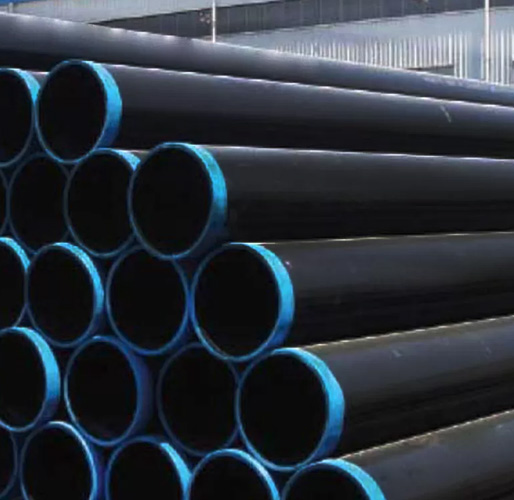
What is ASTM A210 Grade C Tube?
The ASTM A210 Grade C is a seamless medium-carbon steel tube. It follows the ASTM A210 Grade C tube specification for superheater and boiler jobs. High temperatures and high pressures in 300MW or 600MW power stations need this material. It is a pearlitic hot-strong steel with great mechanical strength. Apart from being stronger, it has a higher carbon limit of 0.35% while Grade A1 only has 0.27%. We make these using a seamless process. They can be hot-finished or cold-finished to keep the walls even and the structure solid.
ASTM A210 Grade C Tube Specifications
This specification handles all the technical rules for high-strength boiler tubes.
| Feature | Detail |
|---|---|
| Standard | ASTM A210/A210M, ASME SA210 |
| OD Range | 1/2" to 5" (12.7mm to 127mm) |
| Wall Thickness | 0.035" to 0.500" (0.9mm to 12.7mm) |
| Schedules | SCH20, SCH30, SCH40, STD, XH, SCH80, SCH100, SCH120, SCH140, SCH160, XXH |
| Length | Single Random, Double Random, Cut Length (max 25m) |
| End Types | Plain End, Beveled End, Threaded |
| Surface Finish | Black, Varnished, Oiled, Pickled, Shot Blasted |
| Manufacture | Hot-finished, Cold-finished |
ASTM A210 Grade C Chemical Composition
The chemical composition given below focuses on higher carbon to get better strength
| Element | Content (%) |
|---|---|
| Carbon (C) | 0.35 max |
| Manganese (Mn) | 0.29 - 1.06* |
| Phosphorus (P) | 0.035 max |
| Sulfur (S) | 0.035 max |
| Silicon (Si) | 0.10 min |
*Note: If carbon drops by 0.01% below the max, manganese can go up by 0.06% above its max, reaching up to 1.35%.
ASTM A210 Grade C Mechanical Properties
These properties show that Grade C has 17% more tensile strength than Grade A1. It also has 8% more yield strength.
| Property | Value |
|---|---|
| Tensile Strength (min) | 485 MPa (70,000 psi) |
| Yield Strength (min) | 275 MPa (40,000 psi) |
| Elongation in 2" (min) | 30% |
| Hardness (max) | 89 HRB / 179 HB |
Note: Mechanical rules do not apply to tubes smaller than 1/8 inch inside or 0.015 inch thick.
ASTM A210 Grade C Equivalent Standards
ASTM A210 Grade C tubes have the following equivalent designations across international standards systems:
| Standard | Equivalent |
|---|---|
| ASTM A210 Gr.C | ASME SA210 Gr.C |
| DIN 17175 | St45.8 |
| EN 10216-2 | P265GH |
| JIS G3461 | STB410 |
| BS 3059 | Grade 360 |
Difference Between ASTM A210 Grade C and Grade A1
ASTM A210 Grade C offers enhanced mechanical properties compared to Grade A1. The A210 grade C vs grade A1 comparison shows significant differences in strength and application:
| Property | Grade C | Grade A1 |
|---|---|---|
| Carbon | 0.35% max | 0.27% max |
| Tensile Strength | 485 MPa min | 415 MPa min |
| Yield Strength | 275 MPa min | 255 MPa min |
| Hardness | 89 HRB / 179 HB max | 79 HRB / 143 HB max |
| Application | High-strength, large capacity boilers | General boiler applications |
ASTM A210 Grade C Heat Treatment
Heat treatment requirements for ASTM A210 Grade C tubes depend on manufacturing method:
- Hot-finished tubes: No heat treatment required
- Cold-finished tubes must receive one of:
- Subcritical anneal
- Full anneal
- Normalising heat treatment
Heat treatment is performed after the final cold finishing process and is critical for achieving the desired mechanical properties in SA 210 Gr C tubes.
ASTM A210 Grade C Tube Applications
These tubes are for high-strength needs in power and processing. Grade C vs Grade A1 shows that Grade C is better when Grade A1 cannot handle the stress.
IBR Approved ASTM A210 Grade C Boiler Tubes
IBR (Indian Boiler Regulation) certification is mandatory for boiler applications in India. The IBR A210 grade C tube ensures safety, quality, and legal compliance for power station projects. Chhajed Steel Corporation supplies IBR certified A210 Grade C tubes with Form 3A/3D certification and third-party inspection by government-approved agencies.
Quality Testing & Certification
As per ASTM A210/A450, the following tests are mandatory. Special note for Grade C: Tears or breaks occurring at the 12 or 6 o'clock positions on Grade C tubing with sizes of 2.375 in. (60.3 mm) OD and smaller shall not be considered a basis for rejection during flattening test.
- Tension Test: One test for lots up to 50 tubes; two tests for larger lots
- Flattening Test: One test from each end of one finished tube per lot
- Flaring Test: One test from each end of one finished tube per lot
- Hardness Test: Brinell or Rockwell on two tubes per lot; max 89 HRB / 179 HB
- Hydrostatic Test: Each tube tested or NDT as specified
- IBR Certification (Form 3A/3D): IBR Certification (Form 3A/3D)
- Govt. Lab Test Certificate (NABL Approved): Govt. Lab Test Certificate (NABL Approved)
- EN 10204/3.1B Material Test Certificate (MTC): EN 10204/3.1B Material Test Certificate (MTC)
- Third Party Inspection Report (TPI): Third Party Inspection Report (TPI)
- 100% Radiography Test Report: 100% Radiography Test Report
- Ultrasonic Test Report: Ultrasonic Test Report
- PMI (Positive Material Identification): PMI (Positive Material Identification)
Frequently Asked Questions
-
What is ASTM A210 Grade C used for?
The ASTM A210 Grade C is used for high-strength boilers. Big power stations of 300MW or 600MW use it for heating pipes and supercritical boilers. -
What is the difference between SA210 Grade C and Grade A1?
SA210 Grade C has higher carbon content (0.35% max vs 0.27% max), higher tensile strength (485 MPa vs 415 MPa), higher yield strength (275 MPa vs 255 MPa), and higher hardness limits (89 HRB vs 79 HRB). Grade C is used where higher strength is required. -
When should I use Grade C instead of Grade A1?
Use ASTM A210 Grade C when higher mechanical strength is required, such as in large capacity power station boilers (300MW+), high-pressure steam systems, and applications where design codes specify higher strength materials. -
What is the maximum hardness for A210 Grade C?
The maximum hardness for A210 Grade C is 89 HRB (Rockwell B) or 179 HB (Brinell Hardness). -
Is ASTM A210 Grade C suitable for high temperature service?
Yes, ASTM A210 Grade C is highly suitable for high-temperature, high-strength service in boilers and superheaters. It is classified as pearlitic hot-strong steel suitable for elevated temperature applications.