



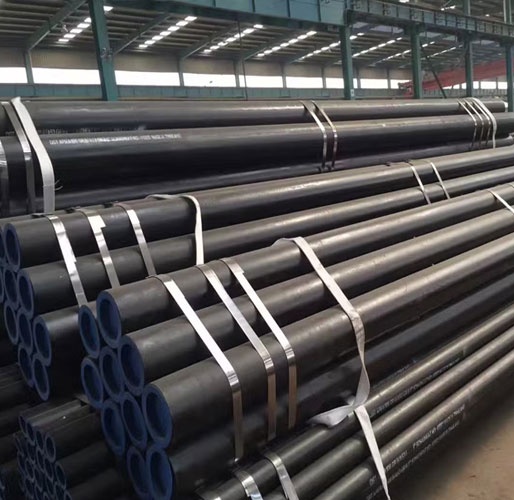
What is ASTM A106 Grade B Pipe?
ASTM A106 Grade B is the standard, most widely specified grade of ASTM A106 seamless carbon steel pipe. With 60 ksi (415 MPa) minimum tensile strength, it serves as the preferred choice for high-temperature refinery, power plant, and process piping applications.
A106 Grade B is manufactured exclusively as a seamless pipe through the hot-finished process. The specification includes sizes from NPS 1/8 to NPS 48. The grade can handle high temperatures where the mechanical properties need to stay stable under thermal stress.
It is required that the pipe undergo hydrostatic testing to make sure that the pressure is stable. Chemical composition controls ensure that the mechanical properties are always consistent, and the parts can be welded together adequately for field installations.
Chemical Composition
A106 Grade B composition balances strength requirements with weldability. The controlled chemistry ensures reliable performance in high-temperature service.
| Element | Grade B |
|---|---|
| Carbon (C) | 0.30% max |
| Manganese (Mn) | 0.29-1.06% |
| Phosphorus (P) | 0.035% max |
| Sulfur (S) | 0.035% max |
| Silicon (Si) | 0.10% min |
| Chromium | 0.40% max |
| Molybdenum | 0.15% max |
Mechanical Properties
A106 Grade B properties provide the strength needed for high-temperature pressure service.
| Property | Grade B |
|---|---|
| Tensile Strength | 415 MPa (60 ksi) |
| Yield Strength | 240 MPa (35 ksi) |
| Elongation (min) | 30% |
Applications
ASTM A106 Gr B seamless pipe is used in the following 4 industries for systems that need to work at high temperatures and pressures. The grade is ideal when the mechanical properties need to stay stable at high temperatures.
A106 Grade B vs A53 Grade B
Both grades share the same mechanical properties, but there is a significant difference in their application scope and testing requirements.
| Property | A106 Grade B | A53 Grade B |
|---|---|---|
| Manufacturing | Seamless only | Seamless and welded |
| Service | High-temperature applications | General purpose |
| Testing | More rigorous requirements | Standard testing |
| Applications | Critical high-temp service | Mechanical, structural, fire protection |
A106 vs A53: Choose A106 Grade B for high-temperature uses where the material properties need to be verified at higher service temperatures. Choose A53 Grade B for general use at room temperature or moderate temperatures.
Testing & Certification
All ASTM A106 Gr B SMLS pipes undergo mandatory testing to verify quality and compliance. Standard tests include:
- Hydrostatic Test
- Tensile Test
- Flattening Test
- EN 10204/3.1B MTC
We provide material test certificates (MTC), third-party inspection reports, and IBR certification as required.
Frequently Asked Questions
-
What temperature is A106 Grade B rated for?
A106 Grade B temperature rating lets you use it continuously at temperatures up to about 400°C (750°F). It is ideal to use chrome-moly alloy grades like P11 or P22 when the temperature is higher. The grade maintains adequate mechanical properties within this temperature range for long-term service. -
Can A106 Grade B be welded?
Yes, ASTM A106 Grade B is easy to weld as it has a controlled amount of carbon. If the wall is thicker than 3/4" (19mm), preheating might be a good idea depending on the carbon equivalent value. For most uses, standard welding methods with low-hydrogen electrodes make good welds.