



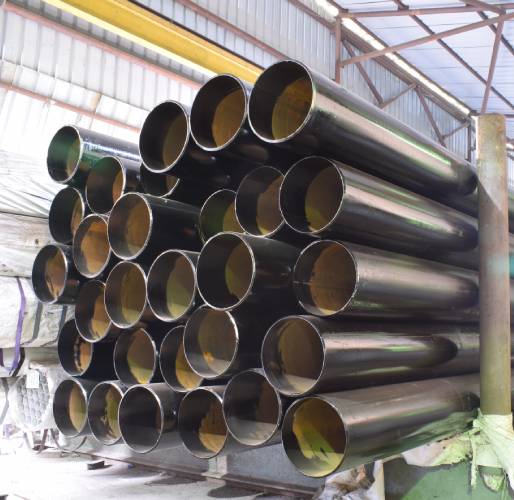
What is the IS 1239 Pipe?
IS 1239 is the Bureau of Indian Standards specification for mild steel tubes. Part 1 covers the steel tubes themselves. Part 2 covers the fittings like elbows, tees and sockets. This standard has been crucial in Indian plumbing and water supply for decades.
The tubes come in three wall thickness classes: light, medium and heavy. This gives engineers the flexibility to match the pipe weight to the application. Low-pressure water distribution might use a light class. Higher pressure gas lines need medium or heavy. Structural applications often go with heavy-duty for extra strength.
Both black (uncoated) and galvanised versions are available. Black pipe works for indoor applications or where the pipe gets painted. Galvanised pipe has a zinc coating for corrosion protection in water service and outdoor use.
IS 1239 Pipe Classes
The three wall thickness classes serve different pressure and load requirements:
- Light Class (L): The thinnest wall of the three classes. It works for low-pressure water distribution where pressure demands are minimal. It is also used for structural applications like handrails, scaffolding and light frames where pressure containment is not a concern. It costs less per metre due to lower material weight.
- Medium Class (M): Standard wall thickness for general water and gas applications. This is the most commonly specified class. Residential plumbing, commercial water supply and low-pressure gas distribution typically use the Medium class. It provides a good balance between cost and pressure capability.
- Heavy Class (H): The thickest wall is for applications that need more pressure and are demanding. Use this class when the Medium class can't handle the working pressure. It is also preferred for structural uses that involve heavy loads. The extra thickness of the wall makes it safer.
Applications
IS 1239 pipes serve water, gas and general engineering purposes:
Frequently Asked Questions
-
What is the difference between IS 1239 Light, Medium, and Heavy?
The classes differ only in wall thickness. Light is the thinnest and the most affordable. Heavy is the thickest and handles higher pressure. The outside diameter stays the same across classes. Only the wall thickness and therefore inside diameter changes. Pressure rating increases with wall thickness.