



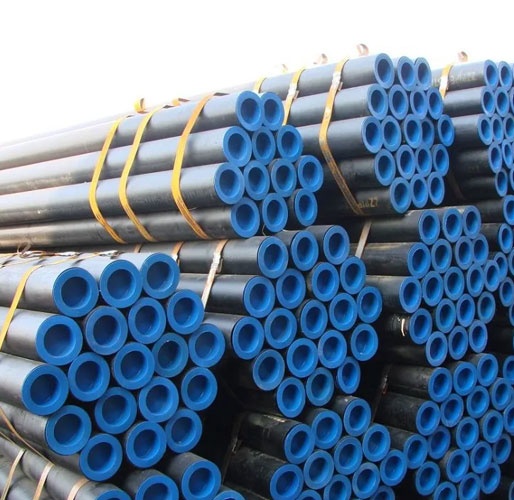
What is ASTM A333 Grade 6 Pipe?
ASTM A333 Grade 6 pipe is a low temperature carbon steel (LTCS) specification. It covers both A333 seamless pipe and welded versions. Engineers choose ASTM A333 6 pipe for applications reaching -45°C. Charpy V-notch impact testing is a must. The pipe gets a normalised heat treatment. This controls the microstructure. Grade 6 is the most common grade in the ASTM A333 pipe specification. It uses the UNS K03006 designation. The notch toughness makes this ASTM A333 carbon steel pipe different from standard grades.
What is IBR Certification for Pipes?
IBR (Indian Boiler Regulation) is a mandatory certification for boiler and pressure vessel components used in India. It is governed by the Central Boilers Board under the Ministry of Commerce and ensures that materials meet safety standards for pressure service. For pipes and tubes, IBR Form III-C certification is required. This IBR certified piping is mandatory for power plants, refineries, and process industries operating in India. The Chhajed Group supplies IBR approved pipes with complete documentation.
ASTM A333 Grade 6 Pipe Specifications
The A333 GR 6 pipe specification lists the standards, dimensions, grades, and finishes we offer:
| Standard | ASTM A333 / ASME SA333 |
|---|---|
| Grades | 6 |
| Size Range | NPS 1/8" to 48" (DN 6 to 1200) |
| Wall Thickness | SCH 10, 20, 30, STD, 40, 60, 80, 100, 120, 140, 160, XXS |
| Length | SRL (18-25ft), DRL (38-40ft), Cut Length |
| Manufacturing | Seamless / Welded (ERW) |
| End Finish | Plain End, Beveled End |
| Heat Treatment | Normalized at 815°C (1500°F) min |
| Impact Test | -45°C (-50°F) |
Chemical Composition of ASTM A333 Grade 6
The A333 Grade 6 chemical composition is controlled for optimal low temperature toughness:
Note: For each 0.01% reduction below 0.30% C, increase of 0.05% Mn permitted up to 1.35% max.
| Element | Grade 6 |
|---|---|
| Carbon (C) | 0.30% max |
| Manganese (Mn) | 0.29-1.06% |
| Phosphorus (P) | 0.025% max |
| Sulfur (S) | 0.025% max |
| Silicon (Si) | 0.10% min |
Mechanical Properties of ASTM A333 Grade 6
The A333 Grade 6 pipe must be strong and tough with high tensile and yield strength.
| Property | Grade 6 |
|---|---|
| Tensile Strength | 415 MPa (60,000 psi) min |
| Yield Strength | 240 MPa (35,000 psi) min |
| Elongation (min) | 30% min (in 2" / 50mm) |
Impact Test Requirements at -45°C (-50°F):
- Average absorbed energy: 18 J (13 ft-lbf) minimum for 3 specimens
- Individual specimen: 14 J (10 ft-lbf) minimum
Impact Test Temperature
ASTM A333 specifies impact testing temperatures for different grades.
| Grade | Minimum Impact Test Temperature | |
|---|---|---|
| °F | °C | |
| 1 | -50 | -45 |
| 3 | -150 | -100 |
| 4 | -150 | -100 |
| 6 | -50 | -45 |
| 7 | -100 | -75 |
| 8 | -320 | -195 |
| 9 | -100 | -75 |
| 10 | -75 | -60 |
| 11 | -320 | -195 |
Heat Treatment Requirements
Heat treatment is required for all ASTM A333 Gr. 6 pipe. It fixes the microstructure.
- Normalising: Heat to 815°C (1500°F) minimum, cool in air
- Quench and Temper: Alternative method permitted
- Double Normalise and Temper: Required for Grade 8
Heat treatment ensures consistent impact toughness at low temperatures for reliable cryogenic service.
Properties & Features of ASTM A333 Grade 6 LTCS Pipes
A333 low temp pipe has 4 specific traits that make it suitable for various industries.

Strength
It has a 60,000 psi tensile strength. It stays durable.

Normalised Structure
Normalising keeps mechanical properties the same across the whole pipe.

Weldability
The 0.30% carbon limit makes welding easy. Most jobs don't need preheating. This saves money.

Low Temperature Toughness
It passes the Charpy test at -45°C. This prevents brittle cracks.
ASTM A333 Grade 6 Pipe Applications
ASTM A333 Grade 6 pipe manufacturer products go into 5 major sectors.
ASTM A333 vs ASTM A106 - Key Differences
The A333 pipe vs A106 comparison reveals fundamental differences in service temperature and testing requirements:
| Property | A333 Grade 6 | A106 Grade B |
|---|---|---|
| Service Temp | Down to -45°C | High temperature |
| Impact Test | Required | Not required |
| Heat Treatment | Normalized | Hot finished OK |
| Applications | Cryogenic service | Steam lines |
A333 is designed for low temperature service while A106 is intended for high temperature applications. Both have similar tensile properties.
Testing & Certification
We perform these tests on ASTM A333 Grade 6 pipe:
- Tensile Test
- Charpy Impact Test at -45°C (-50°F)
- Hydrostatic Test or NDE
- Flattening Test (welded pipes)
- Hardness Test
100% Certified Testing & Documentation
We provide full paperwork for every A333 6 seamless pipe order.
- EN 10204 / 3.1B Material Test Certificates
- IBR Form III-C Certification
- Charpy Impact Test Report at -45°C
- Chemical Analysis Report
- Hydrostatic Test Certificate
- NACE MR0175 / MR0103 Compliance Available
- Third Party Inspection Available
Frequently Asked Questions
-
What temperature is ASTM A333 Grade 6 rated for?
ASTM A333 Grade 6 is rated for service temperatures down to -45°C (-50°F) with standard impact testing. For lower temperatures, supplementary impact testing at the design temperature is required. -
What is the difference between A333 Grade 1 and Grade 6?
Grade 1 is a carbon-manganese steel rated for -45°C service. Grade 6 is the most commonly used grade with similar chemistry but different manufacturing requirements. Grade 6 is preferred for general low-temperature applications due to wider availability. -
Is ASTM A333 Grade 6 same as ASME SA333 Grade 6?
Yes, they are equivalent specifications. ASTM A333 is the material specification, while ASME SA333 is the pressure vessel code version. Both have identical chemical and mechanical requirements. -
What information should I give when purchasing ASTM A333 Grade 6 pipe?
When purchasing ASTM A333 6 pipe, you should specify grade, size, schedule, length, and end finish if you need IBR or NACE.