



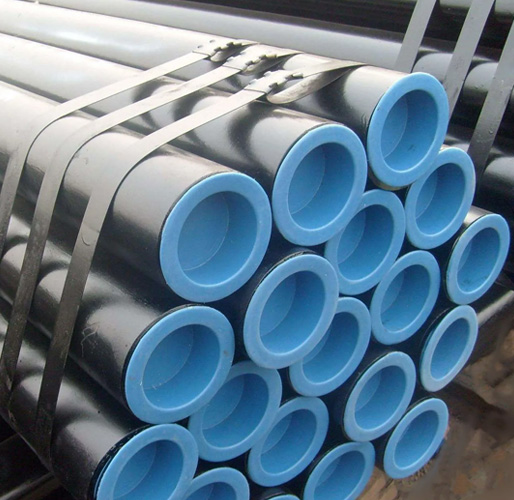
What is Grade 1026 Tube?
Grade 1026 tube is a medium carbon steel tube. The sulfur levels fall between 0.08% and 0.13% to help with machining. This extra sulfur creates manganese sulfide (MnS) inclusions. These inclusions in the steel break up chips while the machine works. You get short chips instead of long, messy ones. This leads to a better surface finish and higher accuracy. Tool life is much longer too. The 1026 steel tubing has the same carbon as 1025 steel. However, the sulfur makes it much easier to cut. Many industries choose 1026 seamless tubing for high-volume applications where speed and quality matter most.
ASTM A519 Grade 1026 Tube Specifications
These details cover our Grade 1026 mechanical tube stock according to the ASTM A519:
| Feature | Detail |
|---|---|
| Standard | ASTM A519 / ASME SA 519 |
| ASTM A519 | Standard Specification covers both seamless hot-finished mechanical tubing and seamless cold-finished mechanical tubing |
| Size | 12 3/4 (323.8mm) |
| Outer Diameter | 6.25 - 1800mm |
| Schedule | 10 – XXS / Thk |
| Shape | Round, Square, Rectangular and Special Sections |
| Length | Single random length / Double random length or as customer’s actual request |
| Grade | 1026 |
ASTM A519 Grade 1026 Tube Chemical Composition
1026 composition uses more sulfur than standard carbon grades. This helps it in machining.
| Grade | C | Mn | P≤ | S≤ |
|---|---|---|---|---|
| 1026 | 0.22-0.28 | 0.60-0.90 | 0.040 | 0.050 |
The sulfur is what makes it different from 1025 grade. It helps break the chips.
ASTM A519 Grade 1026 Tube Mechanical Properties
The 1026 tubing mechanical properties shown below are typical values for cold drawn condition:
| Properties | Metric | Imperial |
|---|---|---|
| Tensile strength | 490 MPa | 71100 psi |
| Yield strength | 415 MPa | 60200 psi |
| Bulk modulus (typical for steel) | 140 GPa | 20300 ksi |
| Shear modulus (typical for steel) | 80.0 GPa | 11600 ksi |
| Elastic modulus | 190-210 GPa | 27557-30458 ksi |
| Poisson’s ratio | 0.27-0.30 | 0.27-0.30 |
| Elongation at break (in 50 mm) | 15.00% | 15.00% |
| Reduction of area | 40.00% | 40.00% |
| Hardness, Brinell | 143 | 143 |
| Hardness, Knoop (converted from Brinell hardness) | 163 | 163 |
| Hardness, Rockwell B (converted from Brinell hardness) | 78 | 78 |
| Hardness, Vickers (converted from Brinell hardness) | 149 | 149 |
| Machinability (based on AISI 1212 steel as 100 machinability. The machinability of Group I bar, rod, and wire products can be improved by cold drawing.) | 75 | 75 |
Note: Mechanical properties vary based on heat treatment condition. Values shown are typical for cold drawn tubing.
1026 vs 1025 vs 1018
The following comparison helps select the right grade based on your application priorities:
| Grade | Carbon (%) | Sulfur (%) | Machinability | Weldability |
|---|---|---|---|---|
| 1018 | 0.15 - 0.20 | 0.05 max | Good | Excellent |
| 1025 | 0.22 - 0.28 | 0.05 max | Good | Very Good |
| 1026 | 0.22 - 0.28 | 0.08 - 0.13 | Excellent | Good |
Choose 1026 when machinability is the priority over weldability. For applications requiring extensive welding, 1025 or 1018 may be more suitable.
Applications
ASTM A519 Grade 1026 tubing is specifically designed for 3 major applications requiring extensive machining operations:
Frequently Asked Questions
-
What is 1026 steel tubing?
1026 steel tubing is a medium carbon, free machining steel tube with elevated sulfur content (0.08-0.13%) that significantly improves machinability over standard carbon steel grades. The sulfur forms manganese sulfide inclusions that act as chip breakers, producing better surface finish, improved dimensional accuracy, and extended tool life during machining operations. -
What is the difference between 1020 and 1026 tube?
The main differences are carbon content and sulfur level. 1020 has lower carbon (0.18-0.23%) and standard sulfur (0.05% max), while 1026 has higher carbon (0.22-0.28%) and elevated sulfur (0.08-0.13%). This makes 1026 stronger and significantly more machinable than 1020, but 1020 offers better weldability. -
Is 1026 tube weldable?
Yes, you can weld 1026 tube. You have to be careful because the sulfur can cause cracks. Use low-hydrogen electrodes like E7018. Keep the heat under control. If welding is the most important part of the job, 1025 might be a better choice.