



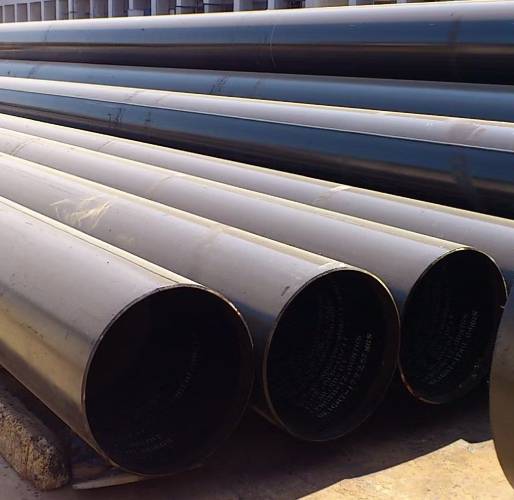
What is Carbon Steel Welded Pipe?
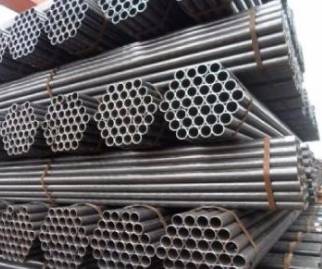
Carbon steel welded pipe is a type of steel pipe that is made by forming a steel strip, coil, or plate into a tubular shape and welding the longitudinal or spiral seam. This is an inexpensive method to transport fluids and gases, and for structural applications where seamless pipe isn't needed.
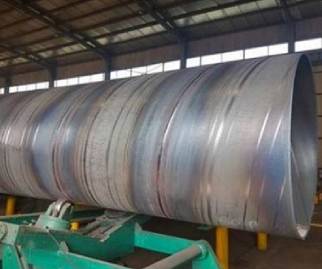
Different welding methods work better for different applications and sizes of pipes. ERW works for smaller diameters, LSAW works for medium to large sizes under high pressure, and SSAW produces the largest diameters at the lowest cost.
Welded carbon steel pipes are easy to weld, have a consistent wall thickness because they are rolled, can be coated for protection, and come in large sizes over 100 inches. These pipes are commonly used for applications like water supply, oil & gas transmission, structural work, piling and construction.
Types of Carbon Steel Welded Pipe
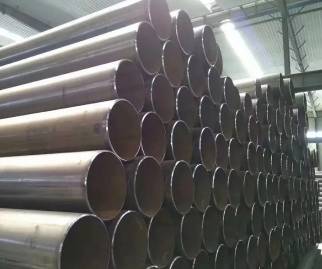
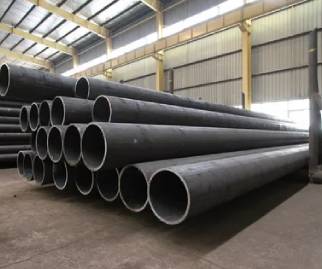
Carbon steel welded pipes are classified by the welding process. There are four main categories: ERW, LSAW/DSAW, SSAW/HSAW and EFW. Each type suits specific diameter ranges and pressure requirements.
Difference Between Welded and Seamless Pipe
The main difference between welded and seamless pipe lies in the manufacturing process:
| Aspect | Welded Pipe | Seamless Pipe |
|---|---|---|
| Manufacturing | From strip/plate with weld seam | From solid billet, no weld |
| Weld Seam | Present (longitudinal or spiral) | None |
| Size Range | 1/2" to 100"+ | 1/2" to 26" typically |
| Cost | Lower | Higher |
| Pressure Rating | Low to medium | Higher |
| Applications | Water supply, structural use, low/medium pressure | High pressure, critical service |
Welded pipes offer a cost advantage for large diameters. Seamless remains preferred for high-pressure, high-temperature service.
Comparison: ERW vs LSAW vs SSAW Pipe
The main differences between ERW, LSAW and SSAW welding processes:
| Aspect | ERW | LSAW | SSAW |
|---|---|---|---|
| Raw Material | Coil / Strip | Plate | Coil |
| Weld Direction | Longitudinal | Longitudinal | Spiral |
| Size Range | 1/2" – 24" | 16" – 60"+ | 16" – 100"+ |
| Weld Quality | Good | Excellent | Good |
| Cost | Low | Higher | Medium |
| Pressure Rating | Medium | High | Low to Medium |
| Applications | Small to medium diameter, general purpose | High-pressure oil & gas pipelines | Large diameter, low-pressure applications like water and piling |
CS Welded Pipe Specifications
To ensure compliance with industry standards refer to the carbon steel weled pipe specifications detailed below:
| Standards | ASTM A53, ASTM A106, ASTM A333, API 5L, ASTM A500 |
|---|---|
| Size Range | NPS 1/8" to 48" (DN 6 to DN 1200) |
| Wall Thickness | SCH 5, 10, 20, 30, 40, 60, 80, 100, 120, 140, 160, STD, XS, XXS |
| Length | 6m, 12m, SRL (18-25ft), DRL (38-40ft) |
| Surface Finish | Black, Galvanised, Coated, Bar |
| End Types | Plain End (PE), Bevelled End (BE), Threaded |
Carbon Steel Welded Pipe Standards
Different standards apply to welded pipes based on application. General purpose, line pipe, structural and high pressure services each have dedicated specifications.
ASTM A53 Welded Pipe
ASTM A53 welded pipe is the most common standard for general-purpose welded pipe. It covers Type E (ERW) and Type F (Furnace Butt Welded). Grades include Grade A (lower strength) and Grade B (higher strength). This pipe is available in black or hot-dipped galvanized and sizes range from NPS 1/8" to 26" (DN 6 to DN 650). It is used in applications like steam, water, gas, air lines, mechanical and structural.
API 5L Welded Pipe
API 5L welded pipe is a standard for line pipe in oil & gas transmission. It covers ERW, LSAW and SSAW welding processes and grades include Grade B, X42, X46, X52, X56, X60, X65, X70, X80. These pipes are available in PSL1 and PSL2 quality levels. Oil, gas, and water pipelines for onshore and offshore service are its common applications.
IS 1239 & IS 3589 Welded Pipe
IS is an Indian standard for steel pipes. IS 1239 pipe is a mild steel pipe for water, gas and sewage in smaller diameters. IS 3589pipe is an ERW steel pipe for larger diameters. Grades include Fe 330, Fe 410, and Fe 450. IS 1239 & IS 3589 welded pipes are popular choices for Indian infrastructure projects.
ASTM A672 & A671 EFW Pipe
These are standards for EFW pipe for high-pressure service. The plate used to make these pipes is of the same quality as the one used in pressure vessels, like A516 and A537. Classes range from 10 to 32, depending on the testing requirements. These pipes are used for power plants, refineries, and high-pressure steam systems.
Welded Carbon Steel Pipes Applications
Carbon steel welded pipes are used in applications requiring cost-effective solutions for fluid and gas transmission. These pipes find applications in the following 7 industries:
Quality Testing & Certification
- Hydrostatic Test: Each pipe tested at specified pressure without leakage through weld or body
- Tensile Test: Transverse tensile test on weld for NPS 8" and larger ERW
- Flattening Test: For NPS 2" and larger with wall thickness XS and lighter
- Bend Test: Guided bend test on weld specimens for LSAW and EFW
- NDT Testing: Ultrasonic, radiographic or eddy current inspection of weld seam
- Weld Seam Heat Treatment: ERW Grade B weld heated to minimum 540°C (1000°F)
Available certifications:
- EN 10204/3.1B Material Test Certificate (MTC)
- Govt. Lab Test Certificate (NABL Approved)
- Third Party Inspection Report (TPI)
- Galvanizing Certificate (for galvanized pipes)
- Coating Inspection Report
- 100% Radiography Report (for LSAW, EFW)
Frequently Asked Questions
-
What is ASTM A53 Type E pipe?
ASTM A53 Type E refers to Electric Resistance Welded (ERW) pipe. Type E is available in Grade A and Grade B. For Grade B, the weld seam must be heat-treated to a minimum of 540°C (1000°F) to eliminate untempered martensite. Type E is suitable for steam, water, gas and air lines. -
What is the maximum size for ERW pipe?
ERW pipe is typically manufactured up to 24 inches (610mm) outside diameter. For larger diameters, LSAW or SSAW processes are used. ERW is most cost-effective for diameters up to 16 inches. -
Which is better for oil pipelines - LSAW or SSAW?
LSAW (Longitudinal Submerged Arc Welded) is preferred for oil and gas transmission pipelines. LSAW provides superior weld quality, lower residual stress and better geometry accuracy. SSAW has a longer weld seam and is typically used for water transmission and low-pressure applications. -
Is a welded pipe suitable for high pressure?
Yes, welded pipe can be used for high-pressure service when properly specified. LSAW pipes with DSAW (double-sided welding) and 100% radiography are suitable for high-pressure oil and gas pipelines. EFW pipes, as per the ASTM A672 standard, are designed specifically for high-pressure, high-temperature service in power plants and refineries.